
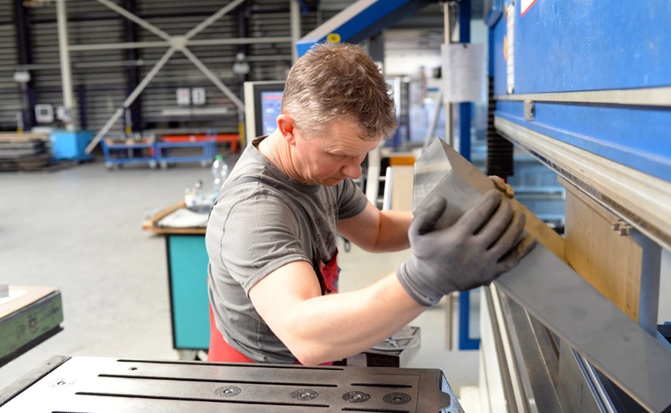
Custom metal fabrication transforms raw metal into components, structures and artistic features designed for a specific purpose. It combines engineering knowledge, modern manufacturing technology and skilled craftsmanship, allowing ideas to move from an initial sketch to a precise, functional finished product.
Unlike standard mass-produced items, fabricated metalwork can be tailored to exact dimensions, performance requirements and visual preferences. This flexibility makes it valuable in architecture, construction, manufacturing, energy, transportation, retail and interior design. Whether the project involves a decorative screen, a machine enclosure or a structural support, fabrication creates solutions that balance appearance, strength and long-term usability.
The field continues to advance through digital design, automation, connected production systems and improved quality control. These developments have not replaced human expertise. Instead, they help designers, engineers and fabricators work together more accurately while reducing waste, avoiding production errors and improving consistency.
What Is Custom Metal Fabrication?
custom metal fabrication is the process of cutting, forming, joining and finishing metal to produce a part or structure based on unique specifications. Materials commonly used include carbon steel, stainless steel, aluminium, copper, brass and specialised alloys.
The choice of metal depends on where the finished product will be used. Stainless steel is valued for corrosion resistance and hygiene, while aluminium offers a favourable strength-to-weight ratio. Carbon steel is widely used when structural strength and cost efficiency are priorities. Copper and brass are often selected for decorative applications because of their distinctive appearance and ability to develop an attractive patina.
A project may involve laser cutting, CNC punching, bending, rolling, machining, welding, fastening, grinding, polishing, coating or assembly. The exact combination of processes is determined by the design, production volume, tolerances, operating conditions and required finish.
From Creative Concept to Manufactured Product
Every successful fabrication project begins with a clear understanding of its purpose. A visually impressive design may still fail if it cannot support the required loads, tolerate environmental exposure or be manufactured within practical limits.
During the early planning stage, the client, designer, engineer and fabricator should discuss dimensions, materials, loads, installation conditions, maintenance needs, applicable standards and budget. Addressing these considerations before production helps prevent expensive redesigns later.
The concept is then developed through technical drawings and digital models. Computer-aided design software allows teams to examine proportions, connection points and component relationships before material is cut. Where appropriate, simulation tools may also help predict stress, deformation, heat transfer or airflow.
Design for manufacturability is an increasingly important part of this process. It involves adapting a design so that it can be produced efficiently without weakening its function or visual identity. A fabricator may recommend adjusting a bend radius, simplifying a joint, standardising material thickness or changing how separate pieces connect. These changes can shorten production time, reduce waste and make the final product easier to assemble or maintain.
Detailed Engineering and Precision
Modern custom metal fabrication depends on a combination of digital accuracy and practical manufacturing knowledge. CNC machinery, laser cutters, press brakes and automated welding systems can reproduce complex geometries with a high degree of consistency. However, the quality of the outcome still depends on correct programming, material behaviour, machine calibration and skilled inspection.
Digital production files can connect design information with cutting, forming, assembly and inspection activities. This connected approach, often described as a digital thread, helps reduce information gaps and supports more consistent manufacturing from one stage to the next. NIST identifies digital-thread development as an important way to reduce production cycles and improve right-first-time manufacturing.
Precision becomes especially important when producing industrial parts, custom enclosures or components that must fit within an existing assembly. Small dimensional errors can affect alignment, sealing, movement or structural performance.
Many organisations therefore work with experienced partners capable of managing multiple processes under one roof. For example, Hocklynn provides capabilities ranging from CNC laser cutting and folding to assembly. Keeping connected operations within a coordinated production environment can improve consistency, simplify communication and allow design adjustments to be evaluated during prototyping.
Prototyping Before Full Production
Prototyping gives clients and fabricators an opportunity to test a design before committing to a complete production run. A prototype may be a full working component, a simplified physical model or an initial production sample created using the intended materials and processes.
This stage can reveal problems that are difficult to identify on a screen. Engineers may discover that a bracket is hard to install, an enclosure lacks adequate access, or a decorative panel bends more than expected. Correcting these issues during prototyping is generally more efficient than modifying an entire batch of completed products.
Modern fabrication businesses may combine conventional fabrication with additive manufacturing when developing prototypes, tooling or highly complex components. Additive processes can be useful for geometries that would be difficult to create through cutting and forming alone. Nevertheless, material qualification, post-processing, tolerances and the intended operating environment must be carefully considered before an additively manufactured part is approved for service.
Materials, Textures and Finishes as Creative Tools
Metal is both a structural material and a creative medium. It can appear industrial and rugged, sleek and minimal, warm and decorative, or almost sculptural. Fabricators can produce flowing curves, sharp geometric forms, perforated patterns, layered screens and three-dimensional surfaces.
Finishing has a major influence on appearance and performance. Polishing can create a reflective surface, while brushing produces a controlled directional texture. Powder coating offers colour and added protection, and galvanising can help shield steel used in exposed environments. Anodising enhances the surface properties of aluminium, while plating and passivation may be used where corrosion resistance, conductivity or specialised performance is required.
The finish should be selected according to the base metal, expected wear, exposure conditions and maintenance plan. An attractive surface that is unsuitable for the environment may stain, corrode or deteriorate prematurely.
Architecture and Interior Design
Architectural metal fabrication allows designers to create building elements that are functional, durable and visually distinctive. Common applications include facades, canopies, balustrades, staircases, decorative screens, entrance features, gates and sun-shading systems.
For exterior applications, the fabricator must consider wind loads, drainage, thermal movement, corrosion, fixings and access for maintenance. Interior projects may focus more heavily on finish quality, tactile details, proportions and the relationship between metal and materials such as timber, glass or stone.
Custom metalwork also gives designers control over dimensions and visual continuity. A staircase, railing and feature screen can be developed as parts of one coordinated design language rather than selected as unrelated standard products.
Public Art and Sculptural Fabrication
Artists regularly collaborate with fabricators to convert small concepts or digital models into large public installations. These projects require more than artistic skill. They must also account for structural stability, public safety, weather exposure, transport and installation.
Fabricators help determine how an artwork should be divided into manufacturable sections, which internal supports are necessary and how visible joints can be minimised. They may also create concealed anchoring systems that preserve the appearance of the artwork while securely connecting it to its foundation.
When artistic ambition and engineering discipline are combined successfully, fabricated metal installations can become recognisable features of parks, commercial developments and urban spaces.
Energy and Renewable Infrastructure
The energy sector relies on metal fabrication for support frames, equipment housings, access platforms, pipework, storage systems and protective structures. Renewable energy installations also use fabricated components in solar-panel mounting systems, wind-energy infrastructure and energy-storage facilities.
These applications frequently require resistance to vibration, moisture, temperature changes, chemicals or outdoor exposure. Material selection, weld quality and protective finishing must therefore reflect the actual operating conditions rather than appearance alone.
Repeatability and traceability are also important when multiple identical components are required. Documented inspection and controlled manufacturing processes help confirm that parts meet the approved design throughout production.
Automotive and Aerospace Applications
Automotive fabrication covers applications ranging from brackets and exhaust components to protective structures, body panels and production tooling. Aerospace projects can involve lightweight assemblies, complex enclosures, precision components and specialised ground-support equipment.
Weight, fatigue resistance, dimensional accuracy and material traceability are particularly important in these sectors. A part that looks correct may still be unsuitable if its material history, joining process or inspection results cannot be verified.
Organisations comparing specialised manufacturers can examine providers such as https://www.amgindustries.com/ alongside other qualified companies. The decision should be based on relevant capabilities, quality controls, production capacity, sector experience and the ability to provide the documentation required for the project.
However, fabrication is only part of the equation for aerospace and defense components. These parts often need to meet strict regulatory and durability requirements before they’re ready for use, which is where finishing comes in. Partnering with an itar certified metal finishing provider ensures coatings such as anodizing, plating, and passivation are applied to the standards these industries require, protecting parts against corrosion and wear over their operational lifespan.
Industrial Equipment and Custom Enclosures
Manufacturers use custom fabrication to create machine guards, frames, cabinets, workstations, hoppers, platforms and production-line components. These items may need to protect sensitive equipment, prevent accidental contact with moving machinery or withstand demanding operating conditions.
Good industrial design also considers access. Doors, removable panels, inspection points and cable routes should allow technicians to service equipment without unnecessary disassembly. Fabricators who understand the intended workflow can often recommend practical improvements that make the finished equipment safer and easier to maintain.
Furniture, Retail and Hospitality
Custom metal fabrication supports the production of tables, shelving, seating, lighting, display systems, counters and decorative installations. In retail and hospitality environments, these elements can reinforce a brand identity while withstanding frequent use.
A successful piece of fabricated furniture must consider more than appearance. It should remain stable, have safe edges, support expected loads and use a finish appropriate for cleaning and daily contact. Components may also be designed for disassembly so they can be transported, repaired or refinished more easily.
Quality, Safety and Sustainability
Quality control should be planned from the beginning rather than treated as a final inspection. Depending on the project, controls may include material verification, dimensional inspection, weld examination, finish checks and assembly testing. A structured quality-management system can help manufacturers deliver consistent products while meeting customer and regulatory expectations.
Safety is equally important. Cutting, grinding and welding can produce sparks, heat, fumes, noise and airborne particles. Suitable ventilation, guarding, fire controls, training and personal protective equipment are essential. Welding, cutting and brazing are covered by dedicated workplace-safety requirements, as outlined in OSHA’s guidance for these activities.
Sustainability is also influencing fabrication decisions. Efficient nesting software can reduce offcuts, while accurate production helps prevent rejected parts and unnecessary rework. Designers can support circularity by choosing recyclable metals, reducing mixed-material assemblies and creating products that can be repaired or disassembled.
Choosing the Right Fabrication Partner
The right partner should have relevant equipment, experienced personnel and a clear understanding of the project’s technical requirements. Clients should evaluate whether a fabricator can work with the selected material, achieve the required tolerances, manage finishing and provide suitable inspection documentation.
Communication is just as important as machinery. A capable fabricator should identify potential problems early, explain practical alternatives and maintain control when drawings or specifications change. Clear quotations should define materials, finishes, tolerances, testing, delivery and installation responsibilities.
Conclusion
Custom metal fabrication brings together imagination, engineering and manufacturing expertise. It enables architects, artists, manufacturers and product designers to create solutions that standard components cannot provide.
Digital design, connected manufacturing, automation and improved inspection are making fabrication more accurate and adaptable. At the same time, skilled judgment remains essential for selecting materials, refining designs and controlling the details that determine long-term performance.
When creativity is supported by sound engineering, careful production and appropriate finishing, ordinary metal can become a durable machine component, a defining architectural feature or an unforgettable work of art.
