
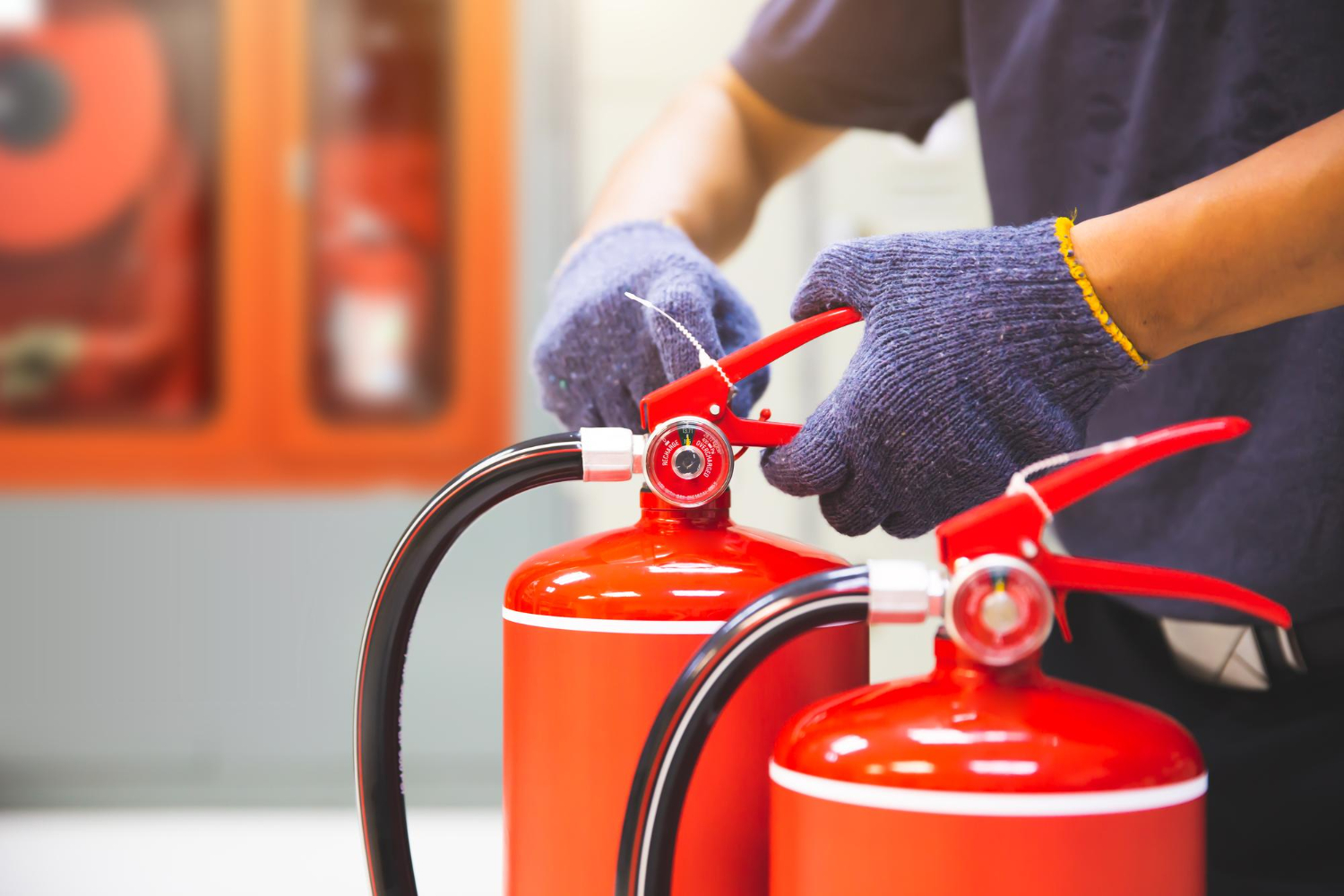
A fire suppression tube is a type of automatic fire suppression system, engineered to detect and extinguish fires without any human intervention or external power supply.
Instead of waiting for a flame to be visible to the naked eye, or for someone to operate a manual extinguisher, this system is already in place, wired into the heart of your electrical cabinets, server rooms, vehicle engines, and any micro-environment where the risk of fire is both real and unpredictable.
The tube-based system is built around a heat-sensitive polymer tubing that’s connected directly to an extinguishing agent container. It forms a sealed, pressurised network inside a high-risk environment. One end of this tubing is fixed to the agent container, where the suppression gas, clean agent, or chemical suppressant is stored, and the other end is routed through the very space you’re trying to protect, strategically placed near components most likely to ignite.
How Does a Fire Suppression Tube Work?
The beauty of the fire suppression tube lies in its responsiveness and independence. It doesn’t need electricity. It doesn’t need to be manually activated. It reacts solely to heat, and does so with surgical precision.
Once installed inside an enclosed electrical space, (for example, electrical panels, server racks, ATMs, vehicle engine bays) the fire suppression pipe remains on constant alert. The moment the temperature inside that enclosure begins to rise, particularly around a sparking wire or overheating fuse, the system kicks into action.
As the temperatures increase, specifically reaching between 150°C to 180°C, the heat-sensitive tubing is engineered to rupture at the exact hottest point. This is actually a targeted response. The rupture creates what is essentially a miniature nozzle, directly over the ignition point. That rupture instantly depressurises the tube to trigger a pneumatic mechanism in the extinguishing agent’s container.
This pressure drop opens the container’s valve and releases the extinguishing agent through the tube and directly onto the flame. Because the nozzle forms precisely where the fire is hottest, the agent hits the fire exactly where it’s needed. This means it doesn’t waste time or suppressant trying to cover a wide area; instead, it reacts quickly, surgically, and efficiently.
The system works in silence, no loud alarm unless connected externally, and extinguishes the fire before it has the chance to grow or spread to neighbouring components.
What Makes Tube-Based Fire Suppression Unique?
These fire suppression tubes aren’t just another way to put out a fire. They’re a smarter, quicker, and more surgical approach to protecting your assets, especially if you’re a business owner.
Here’s why they’re in a league of their own:
- No electricity or batteries needed: The system is entirely pneumatic and mechanical. No need to worry about power outages or dead batteries. It’s always active.
- Pinpoint accuracy: The rupture occurs precisely at the point of highest heat, ensuring immediate and direct agent release onto the source of ignition.
- Always ready: It doesn’t need to wait for visual smoke or human detection. The tubing continuously monitors temperature and reacts as soon as heat builds up.
- Non-destructive suppression agents: The clean agents used to suppress fire in fire suppression systems are typically safe for sensitive electronics, leaving no residue, requiring no clean-up, and causing no electrical damage.
Why is This System Ideal for Enclosed Electrical Spaces?
Electrical fires are uniquely dangerous. They often start in hidden, enclosed, or low-traffic areas, and by the time they’re visible or detected manually, the damage is already underway.
What’s even worse is that many of these spaces such as server racks, vehicle engines, generators, and control panels, are packed with flammable material and constant electrical activity, both of which create perfect conditions for fire.
Fire suppression tubes are designed for these exact scenarios. They’re slim, flexible, and easy to weave through tight enclosures. They cover all high-risk ignition points from the inside, so when something starts to smoulder or spark, the system doesn’t wait for visible smoke. Instead, it shuts the fire down right there, right then.
Where Are Fire Suppression Tubes Most Commonly Installed?
You’ll find tube-based suppression systems wherever fire protection needs to happen in tight spaces without a lot of human oversight. These include:
- Electrical cabinets and control panels
- Server rooms and data racks
- Generators and UPS units
- Vehicle engine compartments
- Telecom shelters
- Battery cabinets
- Enclosed kiosks or ATMs
- E-scooter or e-bike charging stations
Wrapping Up
Fire suppression pipes are just one part of a broader family of fire protection solutions, which also include total flooding systems, kitchen fire suppression systems, and more. All of these share a common goal: detect the fire early, alert occupants or systems, and suppress the fire before it can spread.
But, all things considered, In the hierarchy of active fire suppression systems, these tubes sit firmly at the cutting edge of micro-environmental safety.
This system is a must-have for every business owner. It gives you round-the-clock protection that’s always on guard. If your environment contains sensitive electronics, remote equipment, or enclosed fire-prone spaces, a fire suppression tube system is one thing you can’t afford to not have on ground.
